Monday’s tech news was about power in every sense of the word — the power to run the models, the power inside the labs building them, and the power of the people at the top of the companies that make it all possible.
Nvidia’s board investigates its own CEO
On Sunday, Nvidia’s board announced it is launching an independent investigation into chief executive Jensen Huang, after Huang told staff he had been unfaithful to his wife. That alone would be a major story at any company, but this one goes further. The romantic interest is Alice Huang, an executive at a company called Megaspeed, and United States officials believe she is a Chinese spy who was feeding information back to Beijing.
Let us be careful with the facts. No one has been charged with anything. A spokesperson for the Chinese Embassy in Washington dismissed the allegations in late October as groundless smears and slanders. And Nvidia’s board says it sees no sign that national security or company secrets were compromised.
Still, the stakes are enormous, because Nvidia is not just any company. It makes the chips at the center of the AI boom, and it has also become a major financier of that boom, with stakes in OpenAI, Anthropic, xAI, CoreWeave, and Nebius, along with hundreds of smaller startups. So the question is whether Huang can survive this. TechCrunch spoke on Sunday with Yale professor Jeffrey Sonnenfeld, one of the best-known watchers of chief executives in America. He likes Huang, he called his career salvageable, and he put the odds at about fifty-fifty.
Two dates to watch. Three House chairmen want a closed-door briefing from Huang on November 18, and Nvidia reports its newest earnings on November 17. In the meantime, Huang keeps running the company.
Anthropic buys enough power for a small city
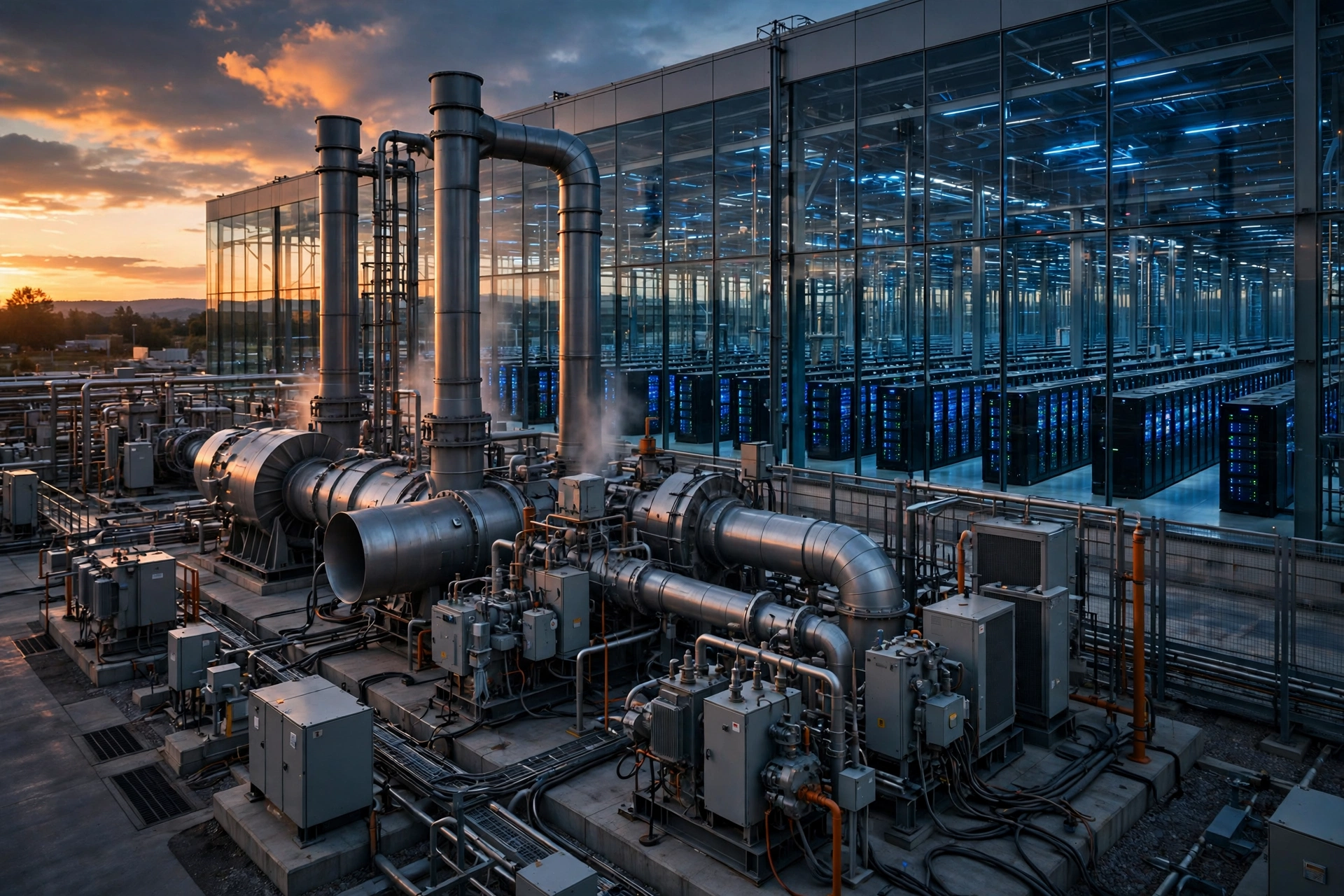
Our second story is also about Anthropic, and it is about power, literally. The Financial Times reported on Sunday that Anthropic has struck a deal worth about $3.4 billion to secure gas-fired power generators for its data centers. Anthropic bought commitments for 1.7 gigawatts of heavy-duty generators in late September, from a San Antonio company called OnePWR Solutions. The deal also included the engineering and construction work needed to install them.
One point seven gigawatts is a lot of electricity. For a sense of scale, that is roughly enough to power more than a million homes. And it tells you something about where the AI race is now. The bottleneck is not just chips or models anymore. It is electricity, and the generators to make it.
A note of caution: Reuters, which carried the report, said it could not immediately verify it, and Anthropic and OnePWR did not respond to requests for comment. But if it holds, it is one of the clearest signs yet that the biggest AI labs are now buying their own power plants, in effect, because the grid cannot keep up.
AI is now accelerating itself
Staying with Anthropic, a new independent report says the company’s AI is now improving about twice as fast as it was a year ago, and that most of that acceleration comes from AI itself. The report comes from METR, an independent AI safety research group, which spent eleven weeks inside Anthropic. Its finding is striking: Anthropic made about two years’ worth of its historical progress in the past year, and by October, most of that speed-up was driven by AI-assisted research rather than simply buying more computing power.
The human side of the numbers is just as striking. Anthropic employees using the company’s most capable internal model reported being about twelve times as productive as they would be without AI help. The report also says Anthropic finished training three unreleased models in recent months, code-named Model Two, Model Three, and Model Four.
And here is the part that has safety researchers alarmed: Anthropic redacted most of the evidence the researchers considered most informative before the report went public, citing commercial sensitivity. Anthropic co-founder Sam McCandlish responded that publishing the details would hand competitors a faster roadmap, which he said would worsen the very risks METR is warning about. It is a genuine tension: the same acceleration that excites researchers is exactly what worries the people whose job is to watch it.
The report also connects to something Anthropic itself put in its IPO filing. The company has said its internal estimates suggest future models may soon meet its own threshold for dramatically accelerated progress attributable to AI. METR’s report is the first outside look at what that actually looks like from the inside.
Nvidia and South Korea team up on sovereign AI
Our fourth story takes us to Seoul, where Nvidia announced a new sovereign AI partnership on Monday at its AI Day event. Nvidia is teaming up with Korean chip startup Rebellions and telecom giant SK Telecom. Rebellions will connect its next-generation R200 neural processing units to Nvidia’s platform using NVLink Fusion, the high-speed link that lets outside chips talk to Nvidia’s systems, and the systems will be built on Nvidia’s MGX rack design.
SK Telecom plans to deploy those systems in its AI data centers, connecting them to its own models and public services under South Korea’s AI for All project. The whole effort is backed by Korea’s Ministry of Science and ICT.
The technical idea is neat. The work of answering a prompt gets split between two kinds of chips: Nvidia’s graphics processors handle the first step, reading the prompt, and Rebellions’ chips handle the second step, generating the answer. The companies say that should improve throughput and energy efficiency.
The systems are expected to be ready for deployment in 2028, so this is a long game. But the bigger picture is the trend: countries increasingly want AI infrastructure built around their own language and priorities, and Nvidia is positioning itself as the platform that trend runs on, even when the chips are not its own.
Quick hits: agentic Siri and Tesla’s robotaxis
First, Apple. Bloomberg’s Mark Gurman reported on Sunday that Apple chief executive John Ternus has pressed software chief Craig Federighi to speed up the Siri roadmap, with the goal of making Siri work more like an agent as early as next year. An agent, in this case, means an assistant that keeps track of goals and keeps working on them without you starting every step, more like OpenAI’s Dots or Meta’s Muse. The nearer milestones are finer control over Apple’s own apps in iOS 27.3, and third-party app integration in the spring, which could let Siri place a food delivery order or book a restaurant table. Apple has not confirmed any of it.
And second, Tesla is expanding its robotaxi service to San Antonio, starting at 5 a.m. local time on Monday. It is the second Texas city after Austin, where the service launched in June of last year. Tesla removed the human safety monitors from its Austin robotaxis in January, and it says the San Antonio launch is the next step in competing with Waymo.
The thread running through it all
The thread running through today is power in every sense of the word. The power to run the models, the power inside the labs building them, and the power of the people at the top of the companies that make it all possible. From a boardroom investigation at the world’s most valuable chipmaker to a $3.4 billion bet on gas generators, the AI industry is showing that its biggest constraints — and its biggest risks — are no longer just technical.
Sources
- Nvidia board investigates CEO Jensen Huang: TechCrunch
- Anthropic $3.4B gas generator deal: Reuters
- METR report on Anthropic AI accelerating itself: The Verge
- Nvidia Korea sovereign AI collaboration: Wall Street Journal
- Apple agentic Siri push: The Verge
- Tesla robotaxi expands to San Antonio: TechCrunch
Adapted from the November 9, 2026 episode of Daily Tech and AI.
Daily Tech and AI is AI-voiced and produced by Angelo Ruiz.
Leave a Reply