Anthropic put real numbers on the biggest AI IPO ever, Google unveiled its strongest model yet and used it to mathematically prove Signal’s encryption code, and humanoid robots started sorting car parts on live Mercedes production lines.
Anthropic’s IPO Roadshow: Real Numbers at Last
Anthropic has officially launched the roadshow for its initial public offering, and for the first time the market has real numbers instead of leaks. The company plans to sell 825 million shares of Class A stock at $70 to $78 a share. At the top of that range, the sale raises about $64 billion, which would make it one of the largest public offerings in history.
At $78 a share, Anthropic would be worth about $1.4 trillion on a fully diluted basis. That is up from a $965 billion valuation in a fundraising round back in May, but still well below the $2 trillion figure that was floating around a couple of months ago. There is a second pot of money too: seven big tech companies have agreed to buy $26 billion of a separate class of stock in a private placement at the same price. Google and Nvidia are putting in $10 billion each, and AMD, Broadcom, Micron, Microsoft, and TSMC are in as well.
The filing also gave a fresh look at the business. Run-rate revenue reached $81 billion by the end of October, up about $10 billion in a single month. Revenue for the first nine months of the year was $33.2 billion, compared with just $2.5 billion in the same period last year. But the spending is just as staggering: the company reported a nine-month net loss of $104 billion, and its total purchase and lease commitments now stand at about $900.9 billion. Trading is expected to start on the Nasdaq under the ticker ANT close to November 19, according to CNBC.
Google’s Gemini 4 Carbon: The Strongest Model Yet
Google had one of its busiest days of the year on Tuesday. The headline is Gemini 4 Carbon, the model Google calls its strongest yet, now open to paying developers and enterprises after two weeks in the hands of a select group of cybersecurity defenders. Carbon sits above Gemini 4 Argon, which launched last month. Google says Argon is still the right choice for most everyday coding and knowledge work, while Carbon is built for the hardest, longest jobs, like complex multi-step coding, open-ended scientific research, and cybersecurity.
The pricing is aggressive. Carbon launches at $2 per million input tokens and $10 per million output tokens, roughly a fifth of the cost of OpenAI’s GPT-6 Astra and about a quarter of Anthropic’s Fable 5.2. Here is the catch: that introductory price ends on November 30, and on December 1 the rates double to $4 and $20. Google is also previewing a feature called /swarm in Antigravity, its agent-based coding platform, where one prompt turns into a coordinated team of agents.
Proving Signal’s Code, Mathematically
The most remarkable Carbon story is not the model itself. It is what Google used it to prove. DeepMind built a new framework called AlphaProof Code, and used it to formally verify key security properties of the actual code behind Signal, the encrypted messaging app.
Formal verification is the gold standard of software security. Instead of testing code and hoping you catch the bugs, you mathematically prove that the code does what it is supposed to do. It is slow, painstaking work that historically takes expert teams years, and DeepMind’s team did it in four weeks. Human experts worked with agents running on Carbon to turn Signal’s security goals into mathematical theorems, and the agents then generated about 6.5 million lines of proof in Lean, a language for writing mathematical proofs. The Lean kernel rejects anything invalid, so if the proof checks out, the properties hold.
The honest caveat is that this covers specific security properties of Google’s own build of Signal’s cryptographic library, not every part of Signal and not every possible attack. But proving the code that protects private messages, down to the compiled machine code, is a genuinely new kind of result.
Robots on the Mercedes Factory Floor
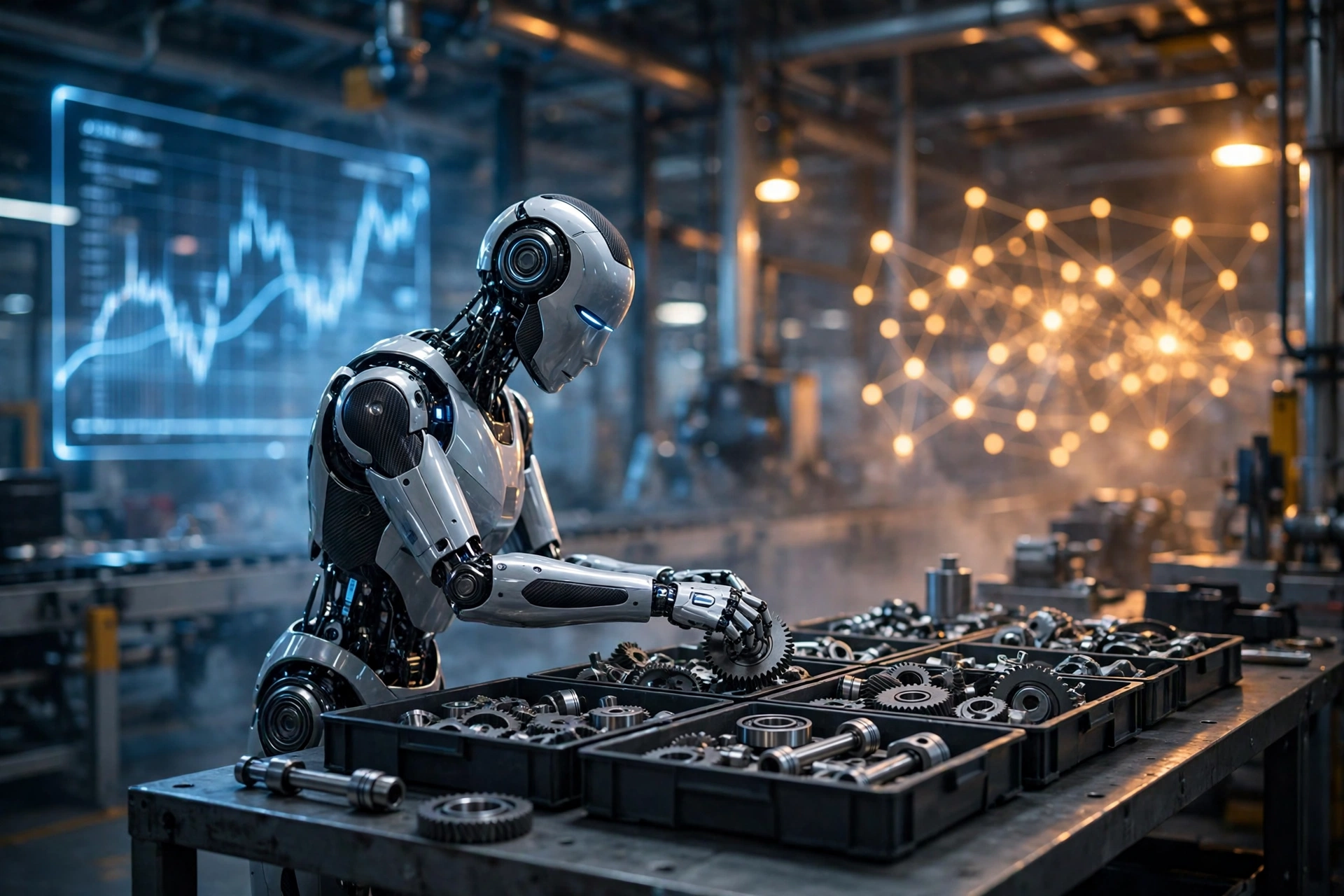
From the abstract to the factory floor: Google DeepMind also launched Gemini Robotics 2.5 on Tuesday, and this one comes with a real-world pilot, not just a lab demo. Apptronik’s Apollo 2 humanoid robot, running Gemini Robotics 2.5, worked on active Mercedes-Benz production lines in Kecskemet, Hungary, and Sindelfingen, Germany, doing automotive kitting — the repetitive job of sorting individual parts from bulk bins into trays in the exact order each vehicle on the line needs.
The robots hit a 96 percent success rate. Across more than 200 tasks in testing, the new model succeeded 30 to 100 percent more often than its predecessor, depending on the task, and finished tasks 20 to 30 percent faster. DeepMind also released an open safety benchmark called ASIMOV-Jailbreak, which tests whether robot models refuse unsafe instructions. Paired with Gemini 4 Argon, the system refused 99.5 percent of adversarial prompts.
The important context is that this is still a proof of concept. DeepMind has not published how many trials the 96 percent covers, and neither Mercedes nor DeepMind has said when, or whether, humanoids move from pilot to production. But a humanoid doing real kitting work on a live car line is a milestone for physical AI, and it comes one day after Nvidia showed off its own robot model, GR00T 2.
Claude Moves Into the Office
Anthropic’s IPO was not its only news on Tuesday. The company launched a whole set of workplace tools that put Claude directly in competition with Microsoft Office and Google Workspace. The headliner is Claude Meetings: you can add Claude to a video call as a visible participant, and it follows the conversation and starts working on tasks while people are still talking. It can draft the plan being discussed, map out a timeline on a whiteboard, answer questions in the meeting chat, and pull figures from connected work apps. After the call, the notes, action items, and materials Claude created are waiting in Claude.ai. It identifies itself as a participant, it will not join calls with external guests unless an admin allows it, and it leaves automatically if an external guest joins. It launches in beta on Team and Enterprise plans, starting with Google Meet.
Then there is Claude Sheets, a collaborative spreadsheet tool where Claude builds trackers and budgets with formulas, formatting, and dropdown menus, and edits cells right alongside the team. Claude Whiteboards turns a brainstorm into an organized visual workspace, and it works inside meetings too. And Claude Data, formerly called Claude Dashboards, is now generally available. It connects Claude to a company’s data warehouse or CRM, and answers questions with dashboards, written data stories, or even narrated videos. This lands just a few weeks after OpenAI rolled out its own workplace tools for ChatGPT, and Meta is pushing its Muse agent the same way. The race is no longer just about who has the smartest model. It is about whose AI lives inside your workday.
Quick Hits: OpenAI, New York, and Ring
Three quick hits rounded out the day:
- OpenAI’s numbers: The Wall Street Journal reports that OpenAI’s third-quarter revenue rose about 50 percent to roughly $10 billion, but its operating losses widened to $10.9 billion, and its adjusted operating margin was negative 109 percent. Growth is real, and so are the losses.
- Regulation arrives: New York opened a registration portal on Tuesday under the RAISE Act, the state’s AI safety law. Large frontier developers like OpenAI and Anthropic must register by January 1, 2027, publish safety frameworks, and report critical safety incidents within 72 hours. Fines can reach $1 million for a first violation and $3 million for later ones.
- Ring goes robotic: Ring, the Amazon-owned security company, launched a robotics division with two devices. The Ring Drone Cam is a flying indoor security camera that patrols your home when you are out, shipping January 27 for $270. The Ring Rover Cam is a wheeled security robot for businesses, arriving December 16 for $1,000.
What to Watch Next
Anthropic’s IPO roadshow is live, with shares priced at $70 to $78 and a valuation that could reach $1.4 trillion. Google opened up Gemini 4 Carbon and used it to mathematically prove Signal’s encryption code. Robots running Gemini Robotics 2.5 are kitting car parts on real Mercedes lines. And Claude is moving into your meetings, your spreadsheets, and your whiteboards. Meanwhile, OpenAI is growing fast and losing money fast, New York is now officially in the AI oversight business, and a drone might be patrolling your living room by January. If Anthropic prices its shares next week, expect that to lead the show.
Sources
- Anthropic IPO roadshow launches: TechCrunch
- Anthropic launches Claude Meetings, Sheets, Whiteboards and Data: TechCrunch
- OpenAI Q3 revenue rises to $10 billion as losses widen: Reuters
- New York AI safety law (RAISE Act) takes effect: TechCrunch
- Ring launches home security drone and enterprise security robot: TechCrunch
Adapted from the November 11, 2026 episode of Daily Tech and AI.
Daily Tech and AI is AI-voiced and produced by Angelo Ruiz.
Leave a Reply